Santorini Wine Guide
Volcanic Terroir: What the Eruption Left Behind
Santorini's vineyards grow in what the Bronze Age eruption left behind: layered pumice, ash, and volcanic sand called aspa — soil with almost no organic matter or clay. It drains instantly yet drinks night humidity, forces tiny yields of intense grapes, and famously defeated phylloxera, leaving vines on their own centuries-old roots. The result: whites of unusual salinity, acidity, and smoky mineral depth.
By Nikolas, traditional Santorini winemaker · Updated:
The vineyard is a crime scene
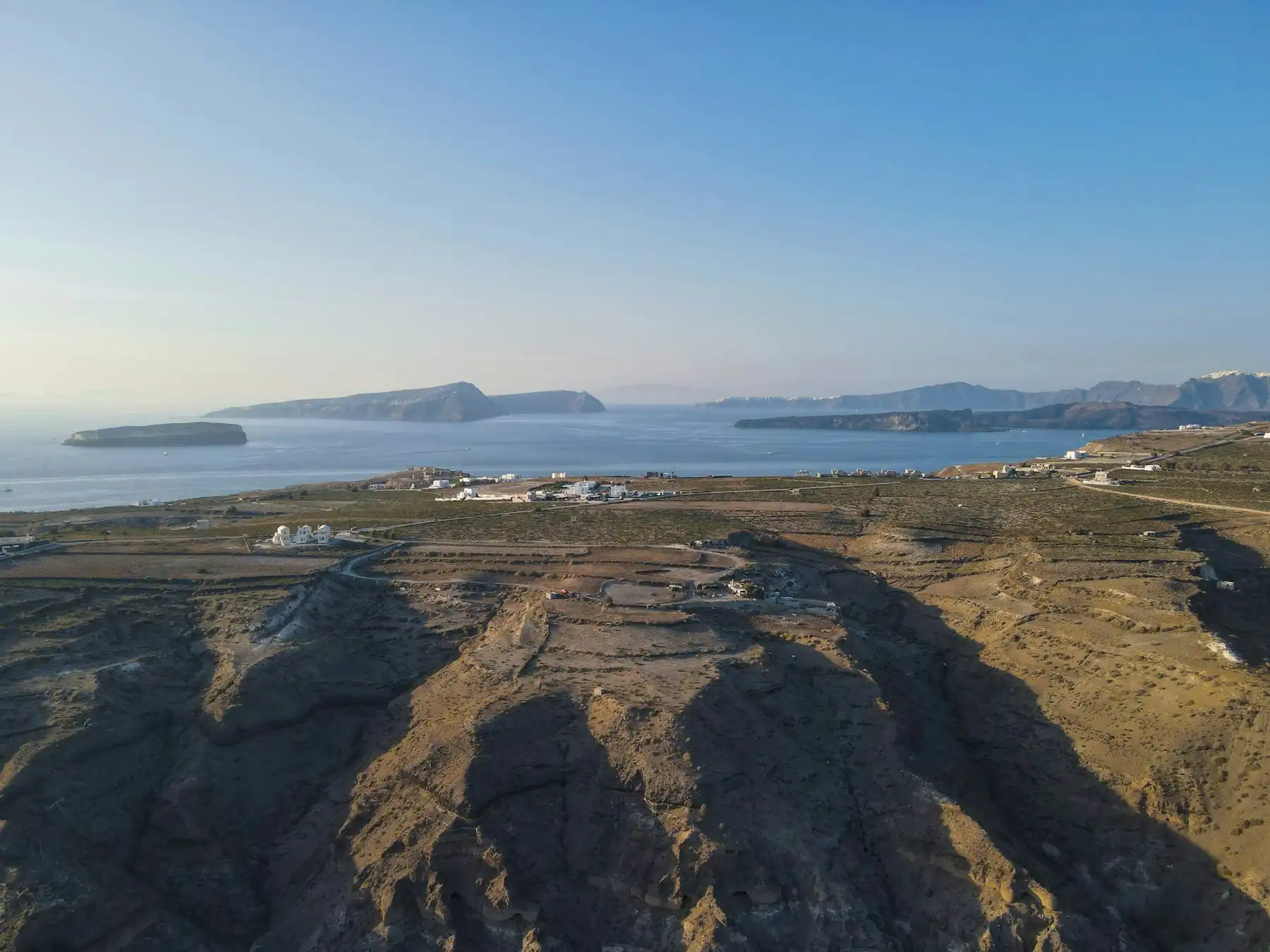
Around 1600 BC, the volcano at the center of this island produced one of the largest eruptions in human history — burying the Bronze Age city at Akrotiri, collapsing the island’s center into the sea (today’s The flooded volcanic crater at Santorini’s center, rimmed by cliffs that hold Fira and Oia. Exactly two winery terraces genuinely face it — fewer than the brochures imply.), and blanketing everything that remained in meters of pumice and ash. Civilizations recorded the sky going dark. The Minoans never recovered.
The vines did. Every glass of Santorini wine is grown in that eruption’s debris field: the locals call the soil aspa — layered volcanic sand, pumice, and ash, pale grey to black, with almost no organic matter, no clay, and no resemblance to what any agricultural textbook calls farmland. Understanding why that catastrophe became a world-class terroir is the deepest story on the island — and it explains nearly everything strange and wonderful in the glass.
What ash does that dirt can’t
It starves the vines productively. Fertile soil makes generous, dilute grapes; aspa’s poverty forces roots meters deep and cuts yields to a fraction of normal vineyards. Small, thick-skinned, concentrated fruit is the whole aesthetic of Santorini wine, and the soil enforces it before any winemaker gets a vote.
It manages water like a desert engineer. Pumice is volcanic foam — riddled with pores that drain a rare downpour instantly (vine roots hate wet feet) yet grab and hold the nightly sea-mist humidity, releasing it slowly through scorching days. Combined with the dew-harvesting kouloura training, it’s a survival system: the island’s vineyards are, functionally, irrigated by the Aegean’s breath.
It keeps the acid switched on. Santorini’s soils are strikingly poor in potassium, and potassium-rich soils are one reason hot-climate wines usually go soft. Chemistry here conspires with Assyrtiko’s natural stubbornness to produce the paradox critics can’t stop writing about: a sun-baked island making whites with cool-climate nerve.
And it repelled the great destroyer. When The root louse that forced most of Europe’s vineyards onto American rootstock in the 19th century. It has never survived Santorini’s sandy volcanic soil — the island’s vines still grow on their own roots. — the root-eating louse that annihilated Europe’s vineyards in the late 1800s — reached the Aegean, it hit a wall of sand. The insect’s soil-dwelling stages need clay structure to survive; aspa offers none. France replanted everything grafted onto American roots. Santorini never had to. The vines you’ll taste from grow on their own original roots, in unbroken genetic lines — 70, 100, 200 years old — one of very few places on the planet where pre-phylloxera European viticulture simply continued.
About the word “minerality”
Let’s be honest where marketing usually isn’t: vines don’t suck lava flavor up their roots — soil minerals don’t transfer to wine as taste in any direct way, and the “volcanic smokiness” you’ll read about is chemistry’s long way around, not geology in a glass. What the volcano does write into the wine is structure: the salinity-adjacent sapidity, the flint-struck aroma, the density-plus-acid tension — all downstream of starvation, water stress, ancient roots, and potassium-poor ground. When your guide says “you’re tasting the volcano,” that’s the honest mechanism behind the poetry. The poetry, once you’re two glasses in on a caldera terrace, is also simply true.
Standing in it
Terroir talk lands differently with your feet in it. Any tour of ours puts a handful of aspa in your palm at the first vineyard stop; Venetsanos pours inside the caldera wall itself; Gaia tastes at sea level where the salinity stops being a metaphor; and the full-circle version is Wine Tasting at Sea — drinking Santorini’s flagship white grape — bone-dry and mineral, all lemon, flint, and sea-spray salinity, with acidity that lets the best bottles age for two decades. Pronounced ah-SEER-tee-ko. while floating in the flooded crater that made it. Three thousand years after the sky went dark, the debris pays for the island’s dinner. There are worse endings to a catastrophe. The longer story — who planted first, and how the wine survived every empire since — continues in our history chapter.
What makes Santorini’s terroir unique?
Santorini’s vineyards grow in what the Bronze Age eruption left behind around 1600 BC: deep layers of pumice, ash, and volcanic sand — the locals’ aspa — with almost no clay or organic matter in it. That strange ground does four things ordinary dirt cannot. It starves the vines, sending roots far underground and shrinking crops to a fraction of a conventional vineyard’s, which concentrates everything in the fruit. It sheds sudden rain in minutes yet soaks up the Aegean’s night humidity, so sea mist effectively irrigates the island. Its potassium-poor chemistry lets grapes ripen under fierce sun with their acidity intact. And because phylloxera cannot live in clay-free sand, the louse that pushed Europe onto grafted rootstock never established here — Assyrtiko still grows on its own roots, some two centuries old, inside wind-proof kouloura baskets. The result: salty, smoky, high-tension whites no other region can copy.
Good to know
Questions travelers ask
Why did phylloxera never destroy Santorini's vineyards?
The louse that killed 19th-century Europe's vines spends part of its life cycle in soil — and it needs clay-rich earth to tunnel and survive. Santorini's ground is loose volcanic sand and pumice with essentially no clay: phylloxera can't establish. While the rest of Europe replanted everything on grafted American rootstock, Santorini's vines simply continued — making them some of the oldest ungrafted roots in the world.
How does volcanic soil actually affect the wine's taste?
Indirectly but decisively. The nutrient-poor ash forces deep roots and tiny yields, concentrating flavor and acid; excellent drainage plus water stress adds density; and Santorini's soils are notably potassium-poor, which helps the grapes hold their screaming acidity in a hot climate. The famous 'smoky flint and salt' character tracks with these conditions — the volcano writes the wine's structure, not a literal flavor of lava.
Do the vineyards get any water at all?
Almost none from the sky in summer — the island's real irrigation is air. Night humidity and sea mist condense on the low kouloura coils and soak into the pumice, which holds moisture like a sponge and feeds it back to the roots by day. It's a closed loop between rock, ocean, and plant that no drip line could improve.
Taste what you just read about
Every fact in this guide comes from the cellars we visit weekly. Join a small-group tour and taste Assyrtiko, Nykteri, and Vinsanto where they're made.