Santorini Wine Guide
Santorini Wine History: 3,000 Years on This Rock
Santorini has made wine continuously for more than 3,000 years — from Bronze Age Thera through Venetian traders who shipped 'Vino di Santorini' across Europe, to Russian churches raising chalices of its Vinsanto. Wine was made in canavas, cave cellars dug into volcanic rock. Having dodged phylloxera entirely, the island farms some of Earth's oldest vineyards through today's acclaimed revival.
By Nikolas, traditional Santorini winemaker · Updated:
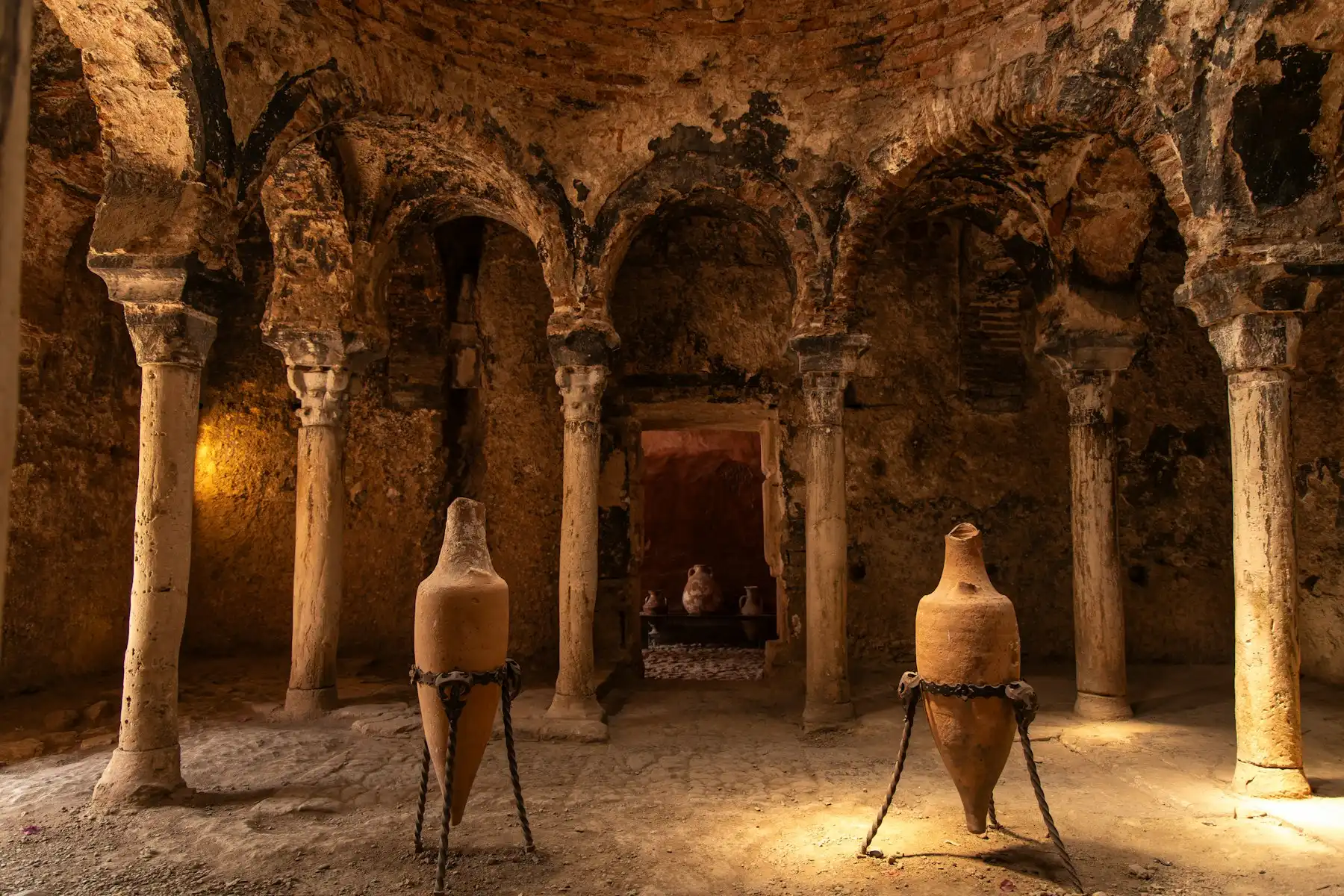
Wine older than the caldera’s name
When the volcano buried the city at Akrotiri around 1600 BC, it sealed a Bronze Age time capsule — and inside it, archaeologists found grape seeds, vessels, and the unmistakable equipment of winemaking. Vines were growing on this island before the eruption that gave it its shape; they were among the first things replanted in the ash afterward. Three thousand years later, they have never stopped. Empires, in order of appearance — Minoan trade partners, classical Thera, Rome, Byzantium, Venice, the Ottomans — all taxed, drank, or shipped this island’s wine. None interrupted it. The volcanic soil that made farming brutal also made the wine impossible to replicate elsewhere, which is history’s most reliable business model.
The Venetian centuries: an island brand is born
Santorini’s medieval fame was sweet. Under Venetian rule the island’s sun-dried amber wine became a prestige export shipped across Europe and deep into the Orthodox world — labeled by origin as Vino di Santorini, contracted in trade to Vinsanto. Russia became the devoted customer: the wine’s stability on long voyages (sweetness and acid are natural preservatives) and its glow in a chalice made it a fixture of church use and aristocratic tables alike. For centuries, “Santorini” in much of Europe meant the wine before it meant the view. The name’s later tangle with Tuscany’s Vin Santo — and why the island’s claim runs older — gets its own chapter.
The canava: winemaking, underground
All of it happened in the A traditional Santorini winery — originally a cave or barrel-vaulted cellar cut into the volcanic rock, where wine was pressed and aged. Many of the island’s modern tasting rooms still sit inside one. — the island’s signature cellar, carved into soft volcanic rock or vaulted half-underground, where temperatures hold cellar-cool through August without a single watt of electricity. Grapes came in at the top; feet did the pressing in the shallow patitiri basin; gravity and stone did the rest. Canavas were the industrial infrastructure of the island for centuries, and their survivors are now its most atmospheric rooms: Gavalas still makes wine in its family canava, Canava Roussos has run since 1836, Art Space turned an 1861 example into cellar-gallery-museum, and the Koutsogiannopoulos cave preserves the whole toolkit 300 meters into the rock. When 1947 brought the first industrial-scale winery — Venetsanos, gravity-flow down the The flooded volcanic crater at Santorini’s center, rimmed by cliffs that hold Fira and Oia. Exactly two winery terraces genuinely face it — fewer than the brochures imply. cliff — even modernity arrived shaped like a canava.
Surviving the twentieth century
History’s cruelest joke on Santorini wine: the blow that spared it (The root louse that forced most of Europe’s vineyards onto American rootstock in the 19th century. It has never survived Santorini’s sandy volcanic soil — the island’s vines still grow on their own roots. bounced off the sand while all Europe replanted) was followed by blows nobody engineered. The 1956 earthquake leveled villages — walk half-abandoned upper Mesa Gonia today and you can read the damage in the masonry — and triggered emigration that emptied the island of farming hands. Then tourism arrived, and a square meter of vineyard became worth incomparably more as a hotel foundation. Vineyard area collapsed across the late twentieth century; the wine culture that had outlasted every empire nearly drowned in prosperity.
The counterattack came from two directions: the growers’ cooperative (Santo Wines, rooted in 1911, union since 1947) kept ~1,200 families’ fruit economically alive, and from the late 1980s a generation of estate pioneers — Paris Sigalas in Oia, Haridimos Hatzidakis in his cave, the modernized houses of Argyros and Karamolegos, Gaia’s arrival from the mainland — proved the island could sell quality at world prices, not just history. International critics followed; PDO protection formalized the rules; and by the 2010s Santorini’s flagship white grape — bone-dry and mineral, all lemon, flint, and sea-spray salinity, with acidity that lets the best bottles age for two decades. Pronounced ah-SEER-tee-ko. had become Greece’s global calling card.
The chapter being written now
Today’s story is scarcity with stakes: three drought years cut the 2025 harvest to a final 450–550 tonnes island-wide — against ~2,300 as recently as 2022 — even as demand and prices climb toward comparisons with Champagne, new cellars open (Vassaltis, 2014; Mikra Thira across the caldera, 2017), and ownership evolves (Sigalas, founded by Paris Sigalas, is today part of the Kir-Yianni family). Three thousand years in, the island is again doing what it has always done: making too little wine, too well, in defiance of conditions — and the best way to read the whole saga remains the cheapest: €95, one museum cave, one 1836 canava, and a glass of amber history at the end.
How old is Santorini’s wine tradition?
More than 3,000 years, without interruption. Excavations at Akrotiri — the Bronze Age town the volcano buried around 1600 BC — turned up grape seeds and winemaking equipment, proof that vines were here before the caldera existed; replanted into the ash, they have been harvested continuously ever since, under every flag from Minoan-era Thera to the Ottomans. Venetian traders turned the island’s sun-dried sweet wine, Vinsanto, into a luxury export prized across Europe and poured in Russian churches. The work happened in canavas, cave cellars cut into the volcanic rock — Canava Roussos has bottled in one since 1836. Because phylloxera never survived the sandy soil, ungrafted root systems here reach 70–200 years of age. The 1956 earthquake and the land-hungry tourism boom nearly finished what no empire could; instead, the revival that began in the 1980s — cooperative and pioneer estates together — made Assyrtiko the modern face of Greek wine.
Good to know
Questions travelers ask
Are Santorini's vineyards really among the oldest in the world?
In the sense that matters most, yes: the winegrowing culture is 3,000+ years unbroken, and because phylloxera never survived the volcanic sand, individual ungrafted root systems commonly reach 70–200 years — with continuous replanting from the same stock stretching back centuries. Few places on Earth combine both claims; none combine them with an active volcano.
What is a canava?
The traditional Santorini winery: a barrel-vaulted cellar carved into soft volcanic rock or built half-underground, where constant cool temperatures made winemaking possible before electricity. Many survive — as working wineries (Gavalas, Roussos), a gallery (Art Space), and restored landmarks — and the word now flavors half the island's wine labels.
What nearly ended Santorini wine?
Not phylloxera — the louse that took Europe never established in the sandy soil. The real blows were economic: the 1956 earthquake triggered mass emigration, and late-20th-century tourism made building plots worth more than vineyards. Vineyard area shrank drastically until the 1980s–90s revival led by the cooperative and pioneering estates proved the wine could command world prices.
Taste what you just read about
Every fact in this guide comes from the cellars we visit weekly. Join a small-group tour and taste Assyrtiko, Nykteri, and Vinsanto where they're made.